

There is a moment in every project when an idea stops being just a sentence.
In software, that moment often comes when the first working build appears on screen. The button works. The data saves. The user flow, which yesterday existed only in a meeting, suddenly behaves like something real.
In this project, that moment happened inside a factory in Shtip, North Macedonia.
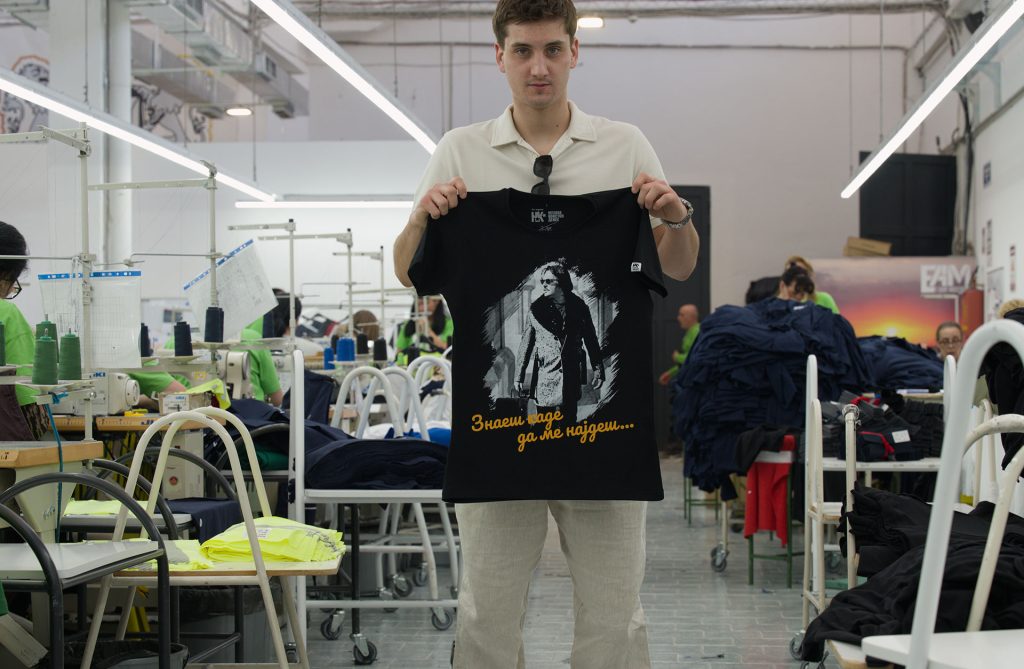
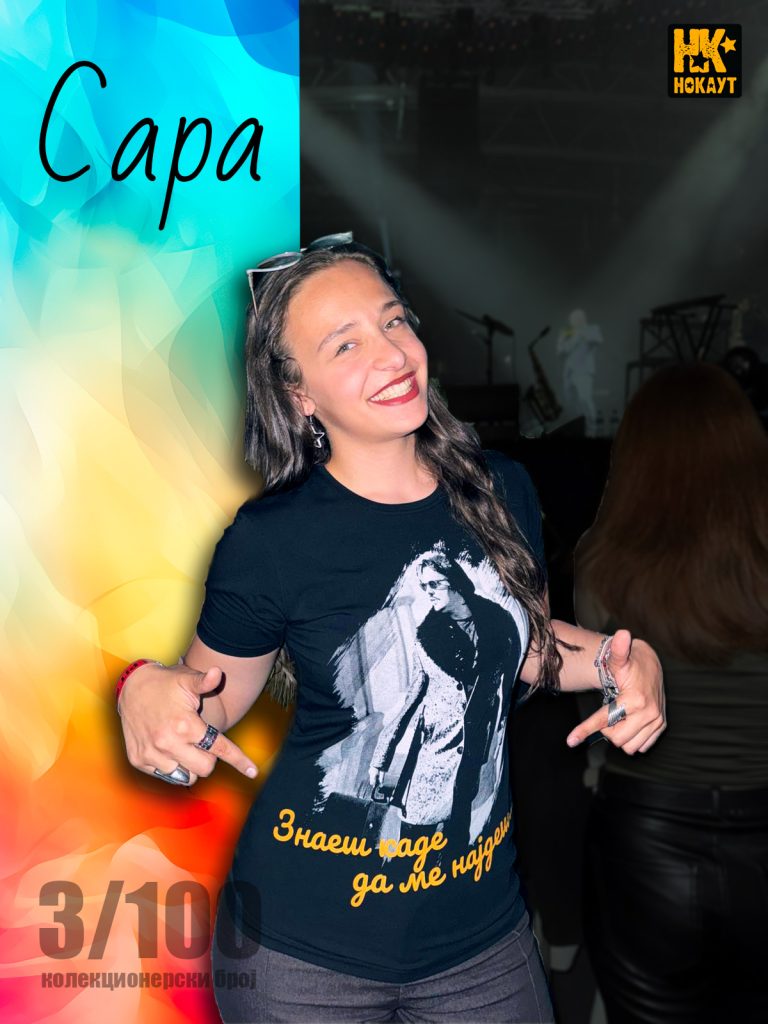
A graphic design that had lived for days on screens, in conversations, in notes, and in my head was finally printed onto fabric. The front piece of a woman’s T-shirt came out with the photograph, the typography, the orange energy of the pop-rock band Nokaut, and the phrase “Знаеш каде да ме најдеш…” (English: You know where to find me) exactly where it needed to be.
Technically, yes, it was a T-shirt. But to me, it was not a T-shirt. It was an artifact.
It was the result of a cultural idea, a business agreement, project planning, product positioning, supplier coordination, design decisions, AI-assisted web development, manufacturing, packaging, storytelling, and launch execution. It was also good to experience the satisfaction of seeing my project management skills gained in the software development industry apply to other fields. When applied carefully, the basic principles of project management can help you ship almost anything.
This is the story of how I, Vasil Buraliev, through Music Nonstop Today and VBU Consulting, took the role of executive producer, project manager, product manager, software developer, writer, and sometimes even photographer, to create a 100-piece limited collectors’ T-shirt series for the frontman of the popular Macedonian pop-rock band Nokaut.
The series was created for women fans of Nokaut, in honor of the band’s three decades of continuous work. The product was produced in exactly 100 pieces. Not 101. Not “another small run if demand is good.” Just 100.
And by May 4, 2026, all 100 pieces were produced and delivered to Music Nonstop Today. Sales started the same day, together with the publication of the fourth behind-the-scenes article, which included the landing page link. By May 11, 2026, five pieces had been sold, leaving 95 available.
That is the short version. The useful version is what happened in between.
Table of Contents
1. Executive Summary
This article is a project management and product management case study about turning a music-merch idea into a shipped physical product.
The project began with a collaboration between me, as executive producer of Music Nonstop Today, and Nikola Perevski – Pere, founder, leader, main vocalist, and frontman of Nokaut. On April 5, 2026, Music Nonstop Today publicly announced an official business collaboration with Pere, taking responsibility for creating and managing part of Nokaut’s branded products, including design, production, sales, distribution, and promotion.
The first product in that collaboration became a women’s collectors’ T-shirt titled “Знаеш каде да ме најдеш…” – a phrase deeply connected with Nokaut’s musical identity and emotional relationship with its audience.
The final product had these characteristics:
- 100 black women’s T-shirts
- 91% cotton / 9% Lycra
- Sizes: M 30 pieces, L 30 pieces, XL 30 pieces, XXL 10 pieces
- Front screen printing
- Hidden neck print
- Woven Nokaut logo label sewn on the sleeve
- Individual product packaging
- Unique numbered magnet paper in the package box
- A strict promise that no identical additional pieces will ever be produced
The woven labels were produced by Cice Trade in Tetovo, and the T-shirts were produced by EAM in Shtip. The design was created by Uroš Veljković. Maksim Buraliev supported the project, delivery logistic and marketing operationally. Emilia Buraliev participated in feedback and the factory visit. Tatjana B. Eftimoska reviewed and corrected the Macedonian language for the landing page. Aleksandar Patrikliski and Nikola Patrikliski were important production-side contacts at EAM.
From a professional perspective, the project is interesting because it was a physical product managed with a software mindset.
I used project framing, scope control, risk identification, roadmap planning, task management in Linear, stakeholder coordination, supplier validation, iterative design, user feedback, AI-assisted landing page development, cloud hosting, GitHub-based code handling, and content-led go-to-market execution.
In simple words, I treated the T-shirt like a product. Not like “merch.” Not like “merch.”
2. The Starting Point: A Partnership, Not a Random Idea
The project did not begin with a print file. It began with trust.
On April 5, 2026, Music Nonstop Today announced an official business collaboration with Pere, the frontman of the popular band Nokaut. The collaboration defined that Music Nonstop Today would create and manage part of Nokaut’s official branded products. That scope included design, production, sales, distribution, and promotional support through Music Nonstop Today as a media platform.
That is important because merch projects often fail before they start. Not because the idea is bad. Not because fans do not want products. But because the business foundation is unclear.
- Who owns the idea?
- Who approves the design?
- Who is allowed to use the band name?
- Who is responsible for production quality?
- Who communicates with fans?
- Who handles the orders?
- Who takes responsibility if the final product is not good enough?
In music, people sometimes avoid these questions because they feel too formal. But avoiding them does not protect the relationship. It usually creates confusion later, and that’s not just the case in the music industry.
For me, the collaboration framework was not bureaucracy. It was the first project artifact.
In software projects, a contract, product brief, or project charter creates alignment before development starts. Here, the same principle applied. Before talking about fabric, print, packaging, and landing pages, we needed to know that the band’s identity, and for this artifact, Pere’s identity as well, because a photo of him is printed on the front of the t-shirt, would be handled responsibly.
Nokaut is not just a name to put on a product. The band carries three decades of memories, songs, concerts, relationships, and emotional value for listeners in Macedonia, especially for female fans. That kind of brand needs care.
So the first product had to prove something.
It had to prove that Music Nonstop Today could take an idea and deliver it in a way that respected Nokaut, Pere, and the people who would buy it.
3. The Coffee Conversation: “I Don’t Want to Make T-Shirts”
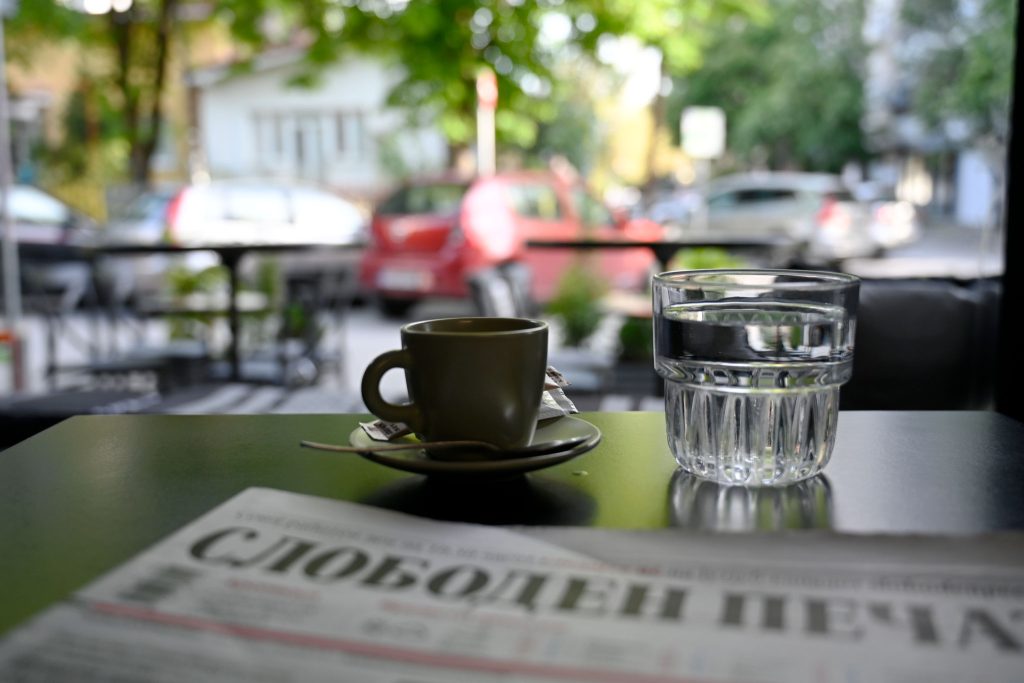
The first real conversation about the collectors’ T-shirt happened over coffee.
I called Pere in the morning and invited him to meet me at Ulica 22, a café in Skopje. The story later became the first behind-the-scenes article, titled “Ајде симињај се!” — a phrase that, in the context of that morning, basically meant: come down, we need to talk.
When Pere arrived, I started explaining the idea.
I told him I wanted to make a T-shirt. Then I corrected myself.
I did not want to make T-shirts. I wanted to make something that would remain. An artifact. Also, I told him I need his help choosing the right photo (aesthetic, storytelling, and clearance aspects) and his approval to start rolling out the idea for the collectors’ edition of a female T-shirt.
That distinction became the product’s north star.
A normal merch item is usually built around availability. You produce it, sell it, maybe print more if it sells well, and keep it as a revenue line. A collectors’ item is different. It is built around limitation, story, and trust.
The initial idea was a small run, somewhere between 100 and 300 pieces, even though those numbers are not so small for the Macedonian market. I strongly believe that those numbers were small compared to the brand, the band, and Pere as a frontman built over the past 3 decades. The item would be for people who truly love Nokaut, Pere’s songs, and the emotional universe around the band. One of the strongest ideas was to use a photograph that fans had not already seen everywhere and to make the product feel like something that belongs to the band’s story, not just to a merchandise table.
Very quickly, the conversation began to expand.
Pere started thinking about stories, symbols, and multiple shirts with lyrics from different songs. That is how creative conversations work. One idea opens ten more.
But this is also where the project manager in me had to interrupt the dreamer in me, and especially the dreamer in Pere.
I knew what would happen if we tried to do too much at once. We would end up with 10 beautiful ideas and zero shipped products.
So I pulled the scope back.
- One product.
- One design direction.
- One limited collectors’ series.
- One clear deadline – at least one week before the big concert scheduled for Saturday, May 9.
That decision was not about thinking small. It was about protecting the chance to actually deliver.
One of the best lessons I have learned from software development is that the first version of a product should not try to include every possible future. It should prove that the core concept works. It should be small enough to ship and strong enough to matter.
That was exactly the logic here. Let’s deliver on one thing, do our best, collect feedback, and test the market. This is not the first time Nokaut has done merch, but this time it was completely different.
4. Product Thinking: Defining What the T-Shirt Really Was
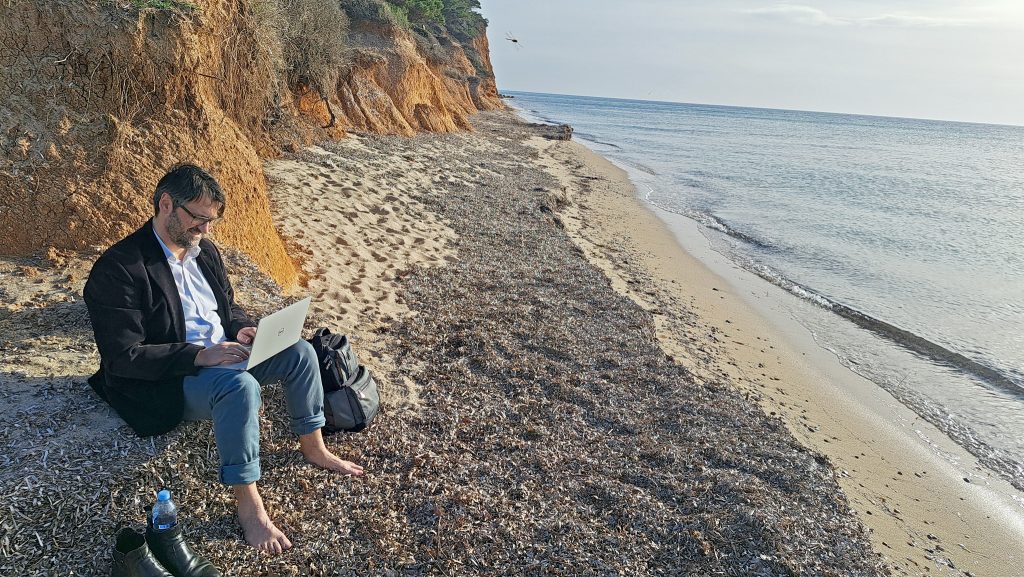
When you build a product, the dangerous question is: “What are we making?” The better question is: “What are we promising?” For this project, the promise had several layers.
- First, we were promising a high-quality women’s T-shirt featuring one of the band’s favorite songs, “Знаеш каде да ме најдеш…”, which is usually performed as the last song of the band’s concerts – a very emotional song.
- Second, we were promising that it would feel like a collectors’ item, not a generic piece of clothing.
- Third, we were promising scarcity. Only 100 pieces would be produced. No additional identical run would be made later, regardless of demand.
- Fourth, we were promising that the selected photograph would stay part of this product’s uniqueness. It would not become a random public visual asset used everywhere afterward.
- Fifth, we were promising that the item would be handled with care from design to packaging and transport.
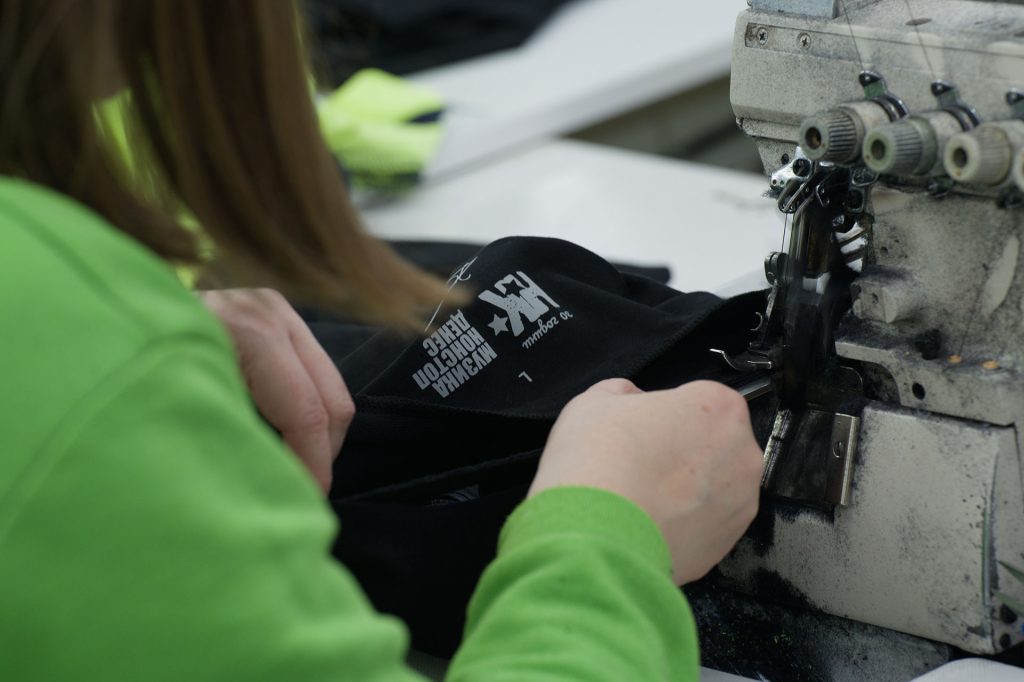
That promise shaped the product specification. The T-shirt was black, made of 91% cotton and 9% lycra, and produced in a women’s fitted model. The size distribution was practical: 30 pieces in M, 30 in L, 30 in XL, and 10 in XXL. The main design would be applied using Screen Printing on the front. A hidden neck print would carry the “30 years of Nokaut” concept together with Music Nonstop Today and Pere’s signature. A woven Nokaut logo label would be sewn onto the sleeve. Each package would include a unique numbered magnet paper, rather than printing a unique number directly on each T-shirt, which would have increased complexity but also improved the actual experience.
That last point is a small but important product-management decision.
Collectors’ value does not always have to live on the product surface. It can live in the packaging system, the certificate, the number, the story, and the promise.
Printing a unique number on every T-shirt sounds attractive at first. It also sounds simple until you enter the reality of production. Every unique print adds additional time, cost, and possible error. For a 100-piece limited run, the numbered magnet paper met collectors’ requirements without making the production process unnecessarily fragile. What I learned is that if I want a unique number on the product with a certain level of quality, I need to add one more working stream to the pre-production process and handle it on time. For this project, it was already late.
That is product management: not saying yes to the most romantic version of an idea, but finding the version that delivers the value without damaging the execution.
5. Planning the Work: Four Screens, One Coffee, and a Roadmap
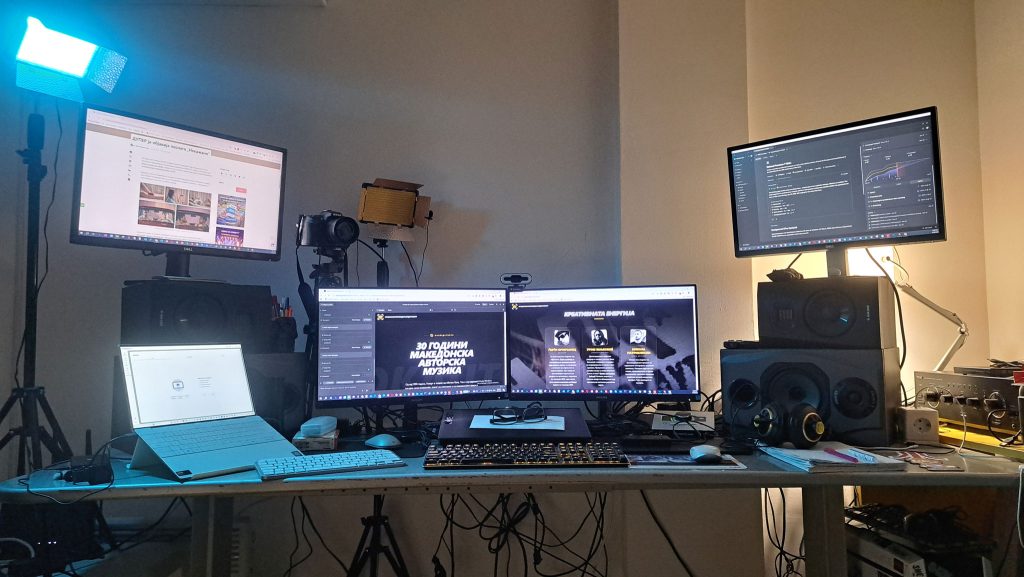
After Pere accepted the idea, I went back to planning.
The second behind-the-scenes article describes me sitting in my office, with multiple screens connected to a Lenovo Legion, thinking through the project after the city had quieted down. The work was not about writing a perfect document. It was about creating enough structure for the project to move. The early planning revolved around four simple but heavy words: design, material, photograph, and people.
Those four words became workstreams.
5.1. Design
The design needed to communicate Nokaut’s identity, Pere’s presence, the anniversary context, and the emotion of the song title “Знаеш каде да ме најдеш…”
It also had to work on fabric, not just on a screen.
5.2. Material
The T-shirt itself had to feel good, hold its shape, and not look tired after a few wears. I did not want a product that looked exciting in a mockup and disappointing in a wardrobe.
5.3. Photograph
The photograph had to carry emotional weight. It had to be strong enough for the front of the T-shirt and unique enough for a collectors’ product.
5.4. People
This was the most important workstream.
I needed the right designer, the right production partner, the right operational help, the right language review, the right feedback loop, and the right approval from the band side.
In many projects, people start by building a task list. I usually start by identifying risks after the key business goals and objectives have been determined.
What can break this project?
For this T-shirt series, the risk map looked something like this:
- The band identity and Pere’s identity might not be handled with enough care.
- The photograph might be used for other purposes after the product is announced and the story about it is rolling through various channels to reach the band’s and the song’s fans.
- Is the photo of Pere alone, not the entire band, good enough to tease Nokaut fans?
- The design might look good digitally, but fail on fabric.
- The material might not match the promise.
- The production partner might not be able to meet the quality or timeline.
- The woven label might delay the sewing process.
- The landing page might not be ready in time for launch.
- The content story might not explain why the product matters.
- Distribution might become messy if not planned early, and it will have a significant impact if most of the pieces are ordered outside Skopje, the city where the VBU Consulting office is located, and where the t-shirts are stored.
- The deadline before the May 9 Nokaut concert could be a source of pressure.
- The price of the product is not low and shouldn’t be, but is that too much for the Macedonian fans? (The risk of achieving the equilibrium with the fans.)
- Too many creative ideas might expand the scope and slow everything down.
Once those risks were visible, planning became easier.
I created the roadmap, gathered the team, and articulated the workload in Linear. Linear is usually associated with software teams, but I like using software project management tools for non-software work too. A task is a task. A dependency is a dependency. A blocker is a blocker. Whether the deliverable is an API endpoint or a woven sleeve label, someone needs to own it, track it, and close it. This time I chose Linear so that I can go deeper into it, and especially try the integration with Cursor – the coding editor which I planned to use for building the Landing page for the product, and all other elements that potentially would be needed related to some coding.
The tool was not the project. The visibility was the project. Linear helped me make the invisible visible and made it easier to collaborate with the operational assistant.
6. Supplier Selection: Looking for Character, Not Only Capability
One of the first serious decisions was production.
I did not want to choose a factory only because it could technically produce a T-shirt. I wanted a partner that understood quality, deadlines, detail, and the difference between “print this” and “help us make something meaningful.”
In the planning article, I wrote that I was not looking only for execution, but also for character and a partner-like approach. I needed a place where a branded label would not be treated as a formality, and where the T-shirt would not be treated as just another product.
That led me to Shtip and EAM.
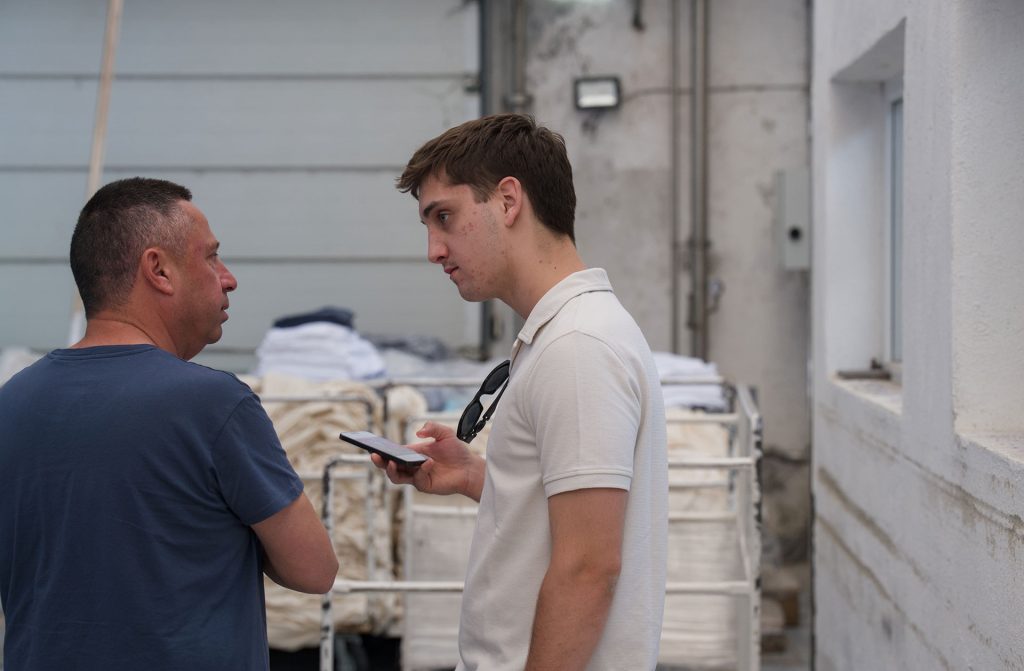
I went there to refresh an old contact and validate the most important production aspects. I explained that I needed an authentic T-shirt that would not look tired after a few wears, but would age with dignity, like a good song. Aleksandar Patrikliski confirmed that they already had a women’s fitted model suitable for my needs. The model was created by Nikola Patrikliski.
That sentence may sound poetic, but behind it is a very practical quality requirement.
A T-shirt is not only visual. It is tactile. It has weight, stretch, recovery, seams, fit, wash behavior, and emotional comfort. People do not experience it as a design file. They experience it on their body.
For founders and product managers, this is an important reminder: the user experience does not stop where your favorite tool stops.
If you are a software founder, you may think the product is the application. But the user experience also includes onboarding emails, invoices, support replies, documentation, loading times, password resets, and cancellation flow.
In this project, for me, this product was not a printed image. It was the fabric, the fit, the sleeve label, the hidden print, the package, the numbered magnet paper, the purchase process, the article series, the delivery experience, “Thank You” video message from Pere delivered via the QR code printed on the flyer inlcuding in the package, and telling the story about every single owner of this collector’s piece of music artifact on social media with all other Nokaut’s fans.
Everything communicates.
7. Building the Team
Once the production direction was becoming clearer, I needed the right people around the project.
I called Urosh Veljkovic because he combines art, music, graphic design, and print preparation. That combination mattered. This was not a generic graphic task. The designer needed to understand music culture, visual balance, and production constraints. Plus, Urosh is a very friendly, extroverted person who is easy to communicate with.
I also needed operational help.
At some point, the project was no longer only about an idea and a design. It had become production, promotion, sales, distribution, communication, and coordination. So I called Maksim Buraliev and asked whether he would help. He agreed, and I made him an operational assistant on the project. I created a user account for him in Linear and shared the plan.
That small action changed the project.
When another person enters a project, the work must become clearer. It is no longer enough that the plan exists in your head. Tasks need names. Responsibilities need owners. Decisions need context. That is why project managers are useful. Not because they “control” people.
Good project managers reduce ambiguity so others can contribute without guessing.
Tatjana B. Eftimoska joined to review the Macedonian language on the landing page. That may sound like a small role, but it was not. When a product is meant to last, the words matter. A typo on a temporary social media post is one thing. A typo on a collector’s product page or packaging communication is different. The language had to respect the product. I do love correct language, and it would be great to have a proofreader for every single sentence in the digital world, but for this project, that would be overkill. Tatjana did a great job as a proofreader on the landing page only, which should stay as a legacy for the product and the project as well.
Emilia Buraliev helped as part of the feedback and production journey. She was also present during the factory visit in Shtip, where the physical side of the project became visible.
On the production side, Aleksandar Patrikliski and Nikola Patrikliski from EAM were key. They helped connect the idea with the manufacturing reality.
This was not a large team. But it was the right team.
That is another lesson from software projects: small teams can deliver excellent work if the roles are clear, the mission is understood, and the communication is direct.
8. The Design Process: From Coffee at Broz to Final Design
The design phase started, naturally, with coffee.
The third behind-the-scenes article describes a morning at Broz café in Skopje, where Urosh Veljkovic joined the espresso before we moved to the office to work on the T-shirt design. By that point, the initial planning, research, and organizational activities were already happening in parallel.
Maksim had already written and sent Urosh the design specification.
The requirements were clear:
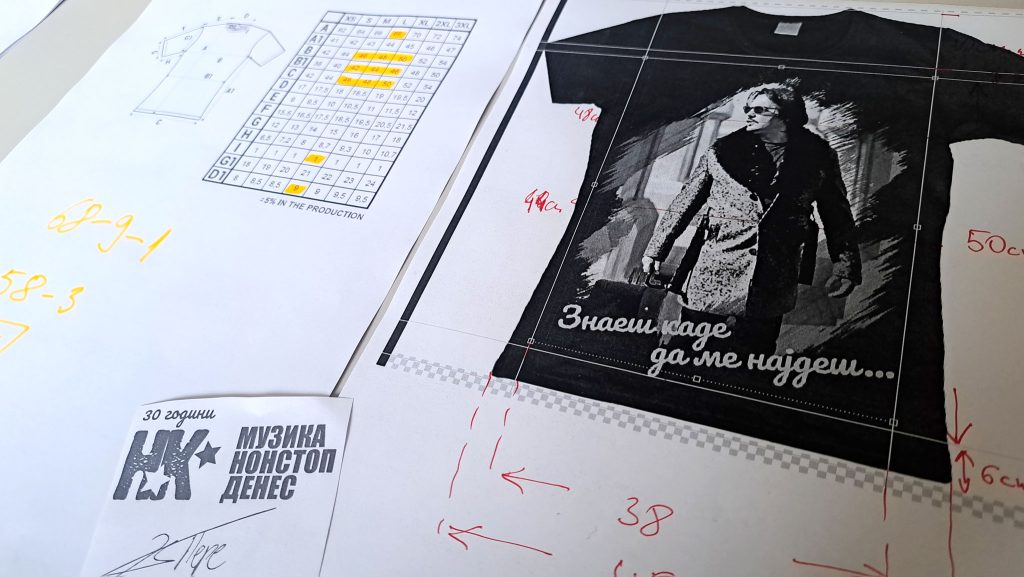
The selected photograph should occupy the entire front side of the T-shirt. The title “Знаеш каде да ме најдеш…” should appear in Macedonian script. The sleeve label should carry the Nokaut logo. Behind the neck, there should be a hidden print with “30 години Нокаут,” “Музика нонстоп денес,” and Pere’s signature.
I like clear specifications. Not because they remove creativity. Because they protect it.
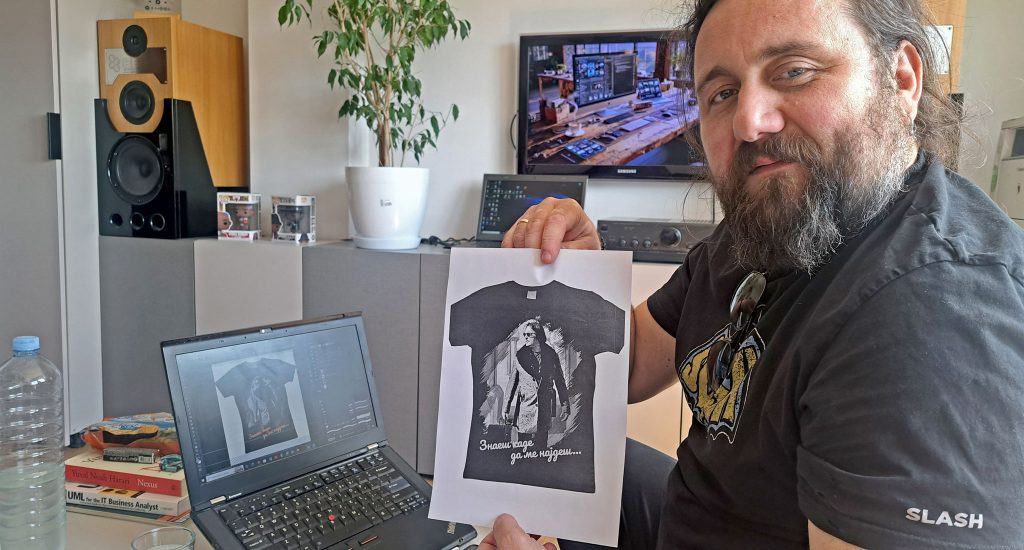
When the designer understands the boundaries, he can spend more energy solving the right problem. Without boundaries, everyone loses time discovering what the project is not.
Urosh worked through the visual balance, the photo treatment, the position of the text, and the overall feeling. Maksim and I reviewed the design. Emilija and several female friends from the target group also reacted positively, which gave us a practical reality check before finalizing the direction.
That feedback loop was simple but important.
You do not always need a formal research process for a small, limited product. But you do need some form of reality testing. You need to show the work to people who are close enough to the target audience and honest enough to react naturally.
The reaction was: “This is top.” That was not a metric, but it was a signal.
Before final approval, I checked with Aleksandar Patrikliski from EAM whether the design could be printed without losing quality. He confirmed that it could. That confirmation was the signal I needed before locking the design for production.
In software terms, this was a feasibility review.
Before you promise a feature, you check whether engineering can build it.
Before I promised this T-shirt, I checked whether production could actually print it properly.
9. The Woven Label: Why Small Details Carry Big Meaning
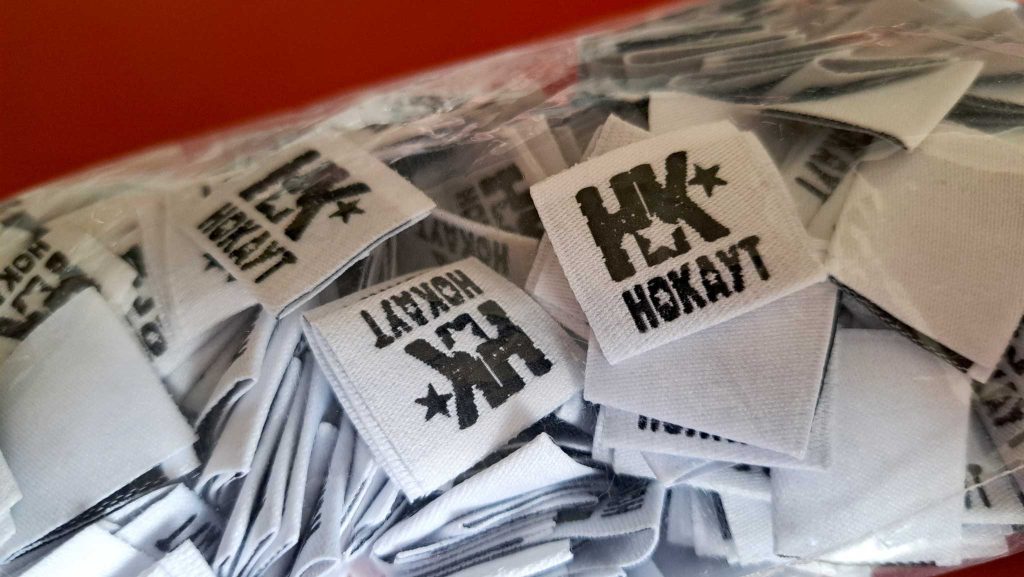
One of my favorite details in the product was the woven label sewn onto the sleeve.
The label carried the Nokaut logo and was produced by Cice Trade in Tetovo. It was not there by accident. It was there because a collectors’ product needs physical signs of care. The third behind-the-scenes article shows the woven label and explains that it would be sewn onto the left sleeve of the collectors’ T-shirt.
This is where product management becomes almost invisible. Most people will not buy the T-shirt because of the sleeve label. But when they hold it, the label helps them feel that the product is intentional. That matters.
In software, this is similar to microcopy, keyboard focus, empty states, thoughtful defaults, or a clean error message. Users may not consciously praise those details, but they feel the difference between a product that was assembled and a product that was designed.
Physical products work the same way.
The woven label said: this is official, this is branded, this belongs to Nokaut, and somebody cared about the finish.
For a 100-piece product, details like that carry more weight because the quantity is small. When you cannot scale the number, you must scale the meaning.
10. The Landing Page: Vibe Coding Meets Product Launch
While the physical product was moving through design and production, I also had to build the sales layer.
A collectors’ T-shirt without a clear landing page is not ready for launch.
The landing page had several jobs:
- Explain what the product is
- Communicate the limited-edition nature
- Show the design and product details
- Provide ordering instructions
- Support trust
- Create a central destination for all promotional content
- Connect the behind-the-scenes story with the purchasing moment
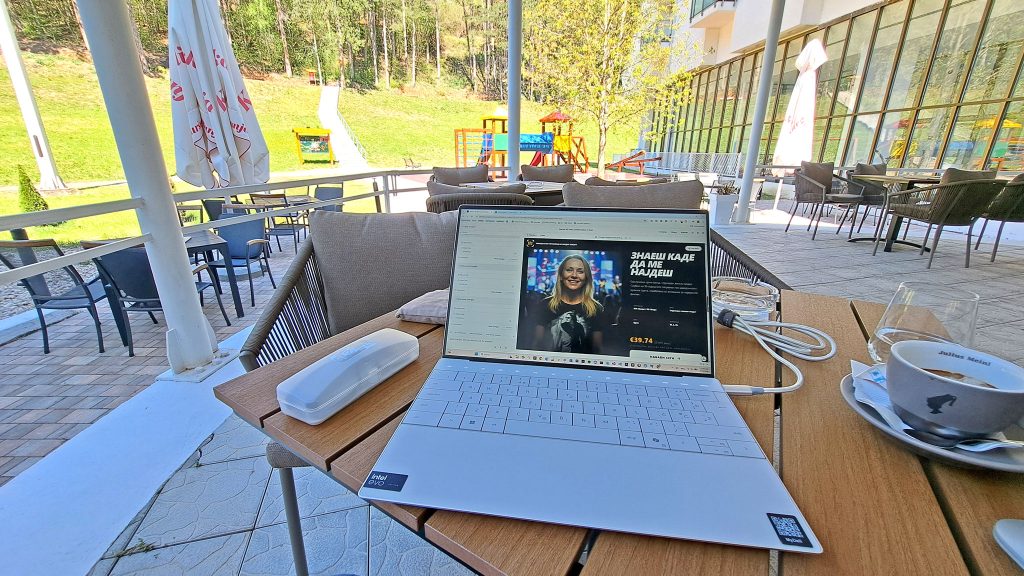
I created the landing page myself using AI Studio from Google. I also experimented with Linear connected to Cursor, using Claude as the LLM to help draft the early landing page direction. In the end, I liked the initial result from Google AI Studio more, so I continued with it, refined the page, published it on Google Cloud, and pushed the code to GitHub.
This is where my software background became directly useful. Never used TypeScript or React before, but I know what I want and how to talk to the machine (read: an LLM).
I used vibe coding – an AI-assisted development approach in which I describe the desired behavior, structure, and feel of the page in natural language, then iteratively review, correct, and shape the generated code until it becomes usable.
For a non-technical reader, vibe coding does not mean pressing one magic button and receiving a perfect product. It means working with AI as a fast-development partner while still applying human judgment, product thinking, quality review, and deployment discipline.
The important part is not that AI wrote code. The important part is that I could evaluate the result. That is the difference between “using AI” and managing AI-assisted production.
Because I have a software development background, I could look at the generated output and ask practical questions:
- Does the page clearly communicate the product?
- Is the structure understandable?
- Can the user find the purchase instructions?
- Is the visual hierarchy acceptable?
- Is the page deployable?
- Can I maintain the code if needed?
- Is this good enough to publish, or only good enough to impress someone in a demo?
For this project, speed mattered. I did not need a custom e-commerce platform. I needed a focused product landing page that could support the launch. AI-assisted development helped me move faster without turning the landing page into a separate software project.
What is also important to mention: I made several compromises and didn’t aim for every detail to be perfect. In a relatively short time, with minimal effort and without knowing the suitable technology, I delivered a result I was satisfied with.
This is a lesson I would recommend to founders: do not overbuild the launch layer for a product that first needs market proof.
Build enough infrastructure to sell, communicate, learn, and support the customer. Then improve.
11. Content as Go-To-Market: The Behind-the-Scenes Series
The product was not launched with only a “buy now” message. It was launched with a story.
I wrote a four-part behind-the-scenes series on Music Nonstop Today:
- Part 1 told the story of the initial coffee conversation with Pere and the idea of creating an artifact instead of ordinary merch.
- Part 2 described the planning, research, production thinking, team formation, and the early landing page work.
- Part 3 focused on the design process with Urosh Veljkovic, the woven label, the design specification, feedback, and production feasibility.
- Part 4 documented the EAM factory visit in Shtip and the moment when the product became real.
This content was not separate from the project. It was part of the product.
When a product has a story, the story helps the buyer understand the value. That is especially true for music merchandise. Fans are not buying cotton and Lycra. They are buying connection, memory, identity, belonging, and a small physical piece of the band’s history.
For project managers, this is a useful reminder: go-to-market work should not be treated as something that starts after production ends. It should be designed into the project from the beginning.
The story created context before the sales link appeared.
By the time the fourth article was published on May 4, 2026, the product was ready, the landing page was live, and the audience could move from reading the production story to ordering the item. The fourth article directly pointed readers to the landing page.
That sequence mattered. Awareness, context, trust, then conversion. Not noise, then panic.
12. The Factory Visit: Where the Product Became Real
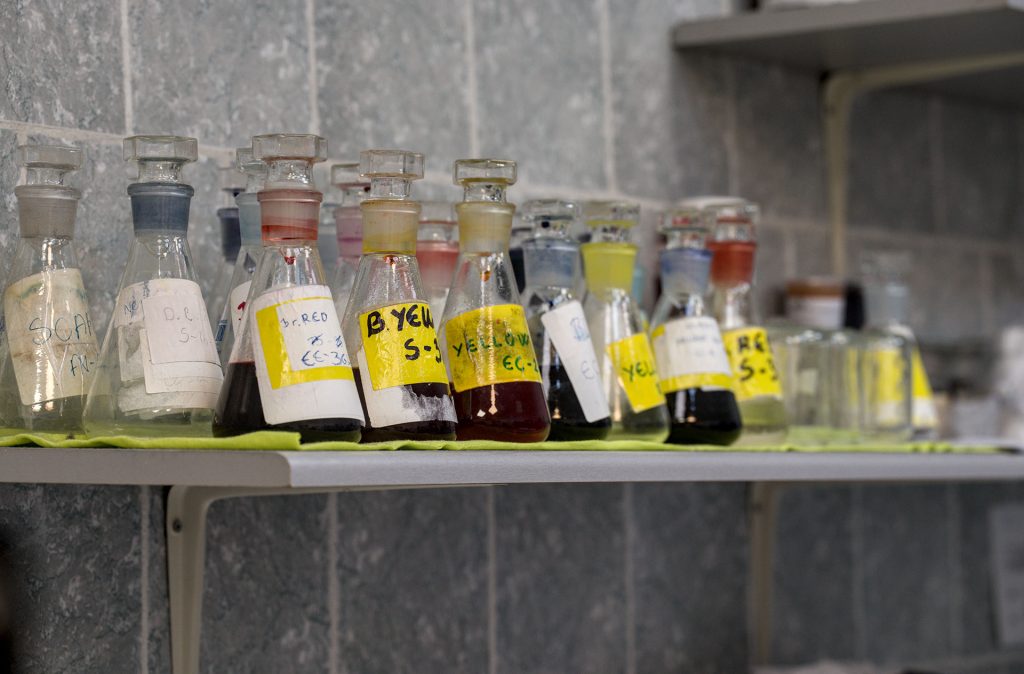
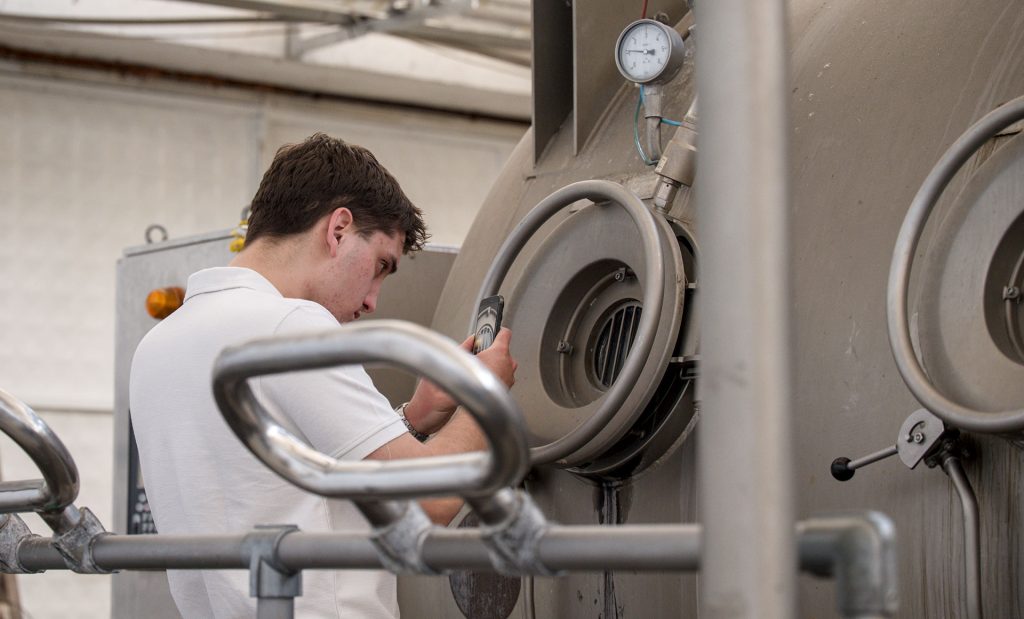
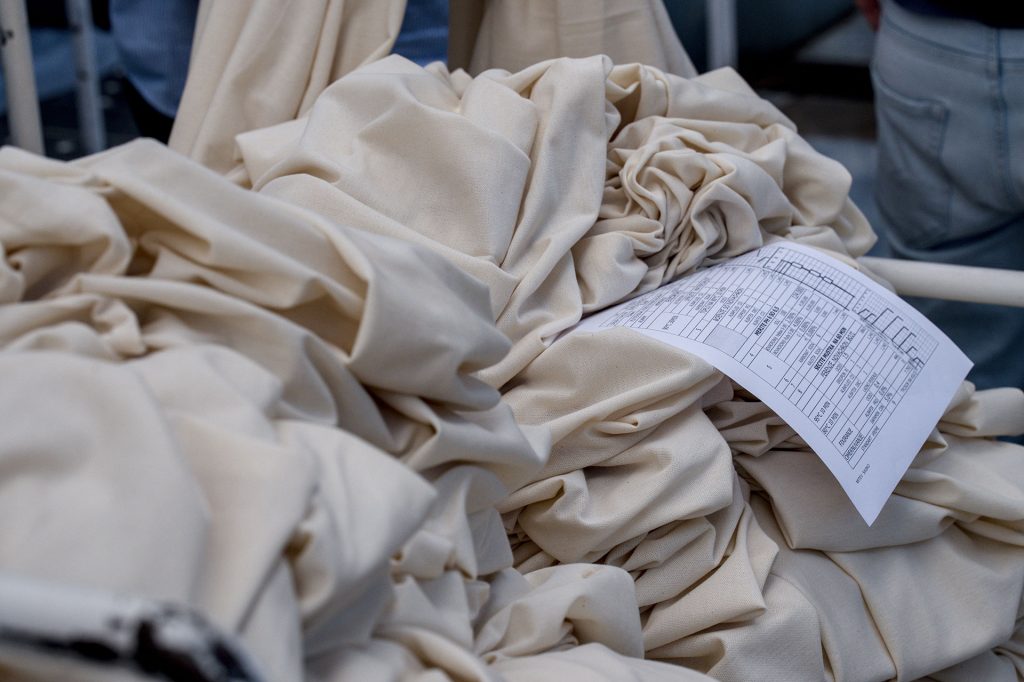
On May 2, 2026, I went to Shtip with Maksim and Emilija to visit EAM and see the production process.
We were welcomed by Aleksandar Patrikliski, general manager and owner of EAM. The factory was not only a production location. It felt like a system. In the behind-the-scenes article, I described how EAM operates with more than 300 people and how that scale becomes visible from the first steps inside the facility.
Aleksandar showed us the process from the beginning.
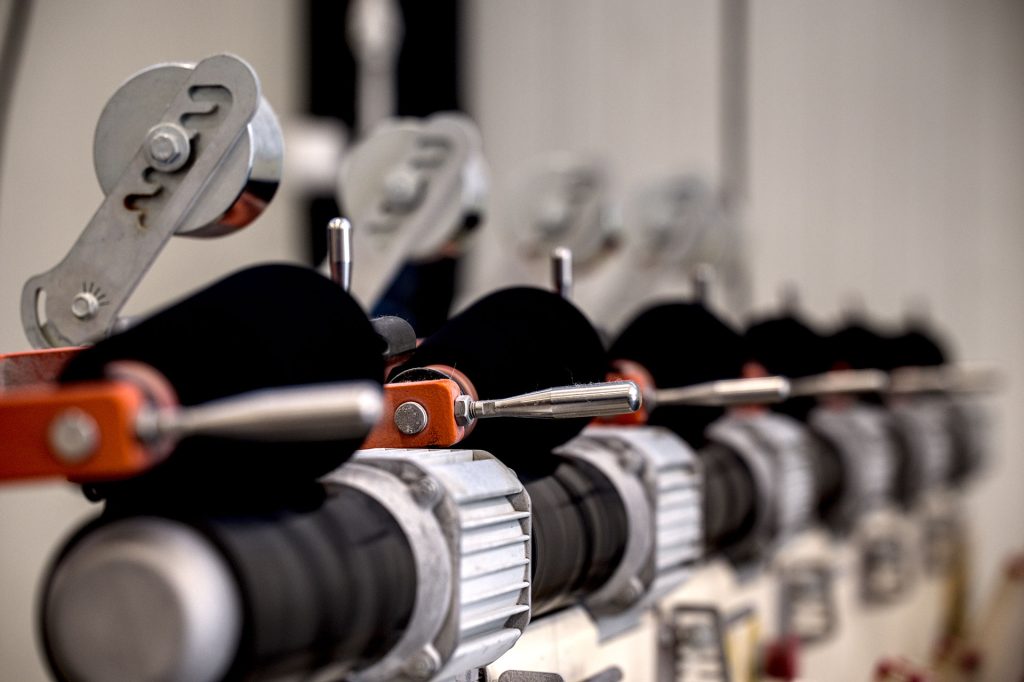
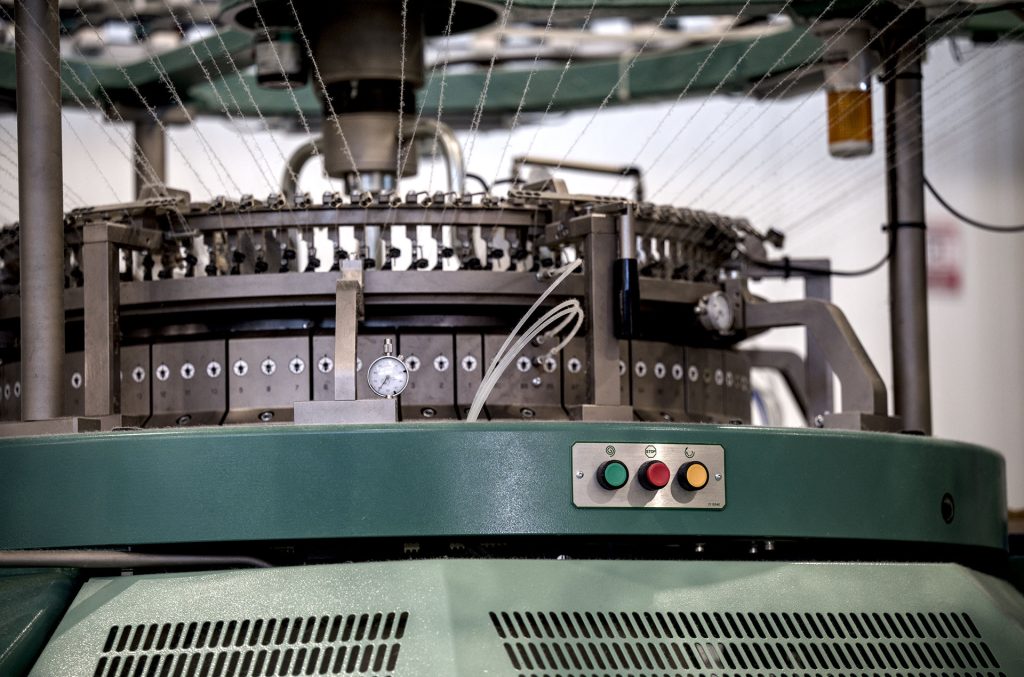
- Threads
- Knitting
- Washing
- Drying
- Dyeing
- Cutting
- Printing
- Sewing
- Finishing
The type of process most customers never see, but absolutely feel when it is done poorly.
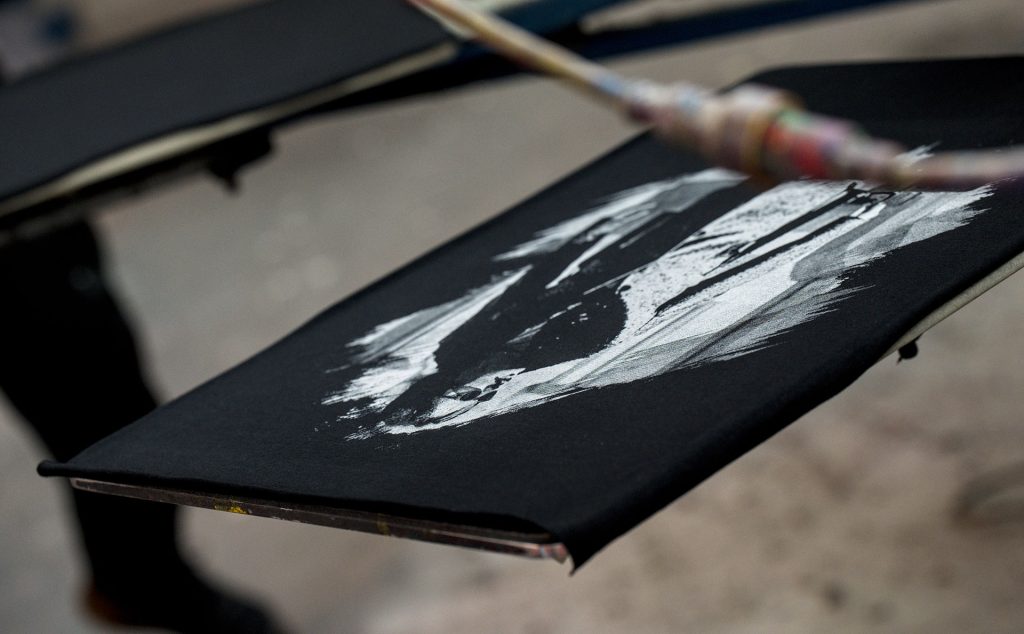
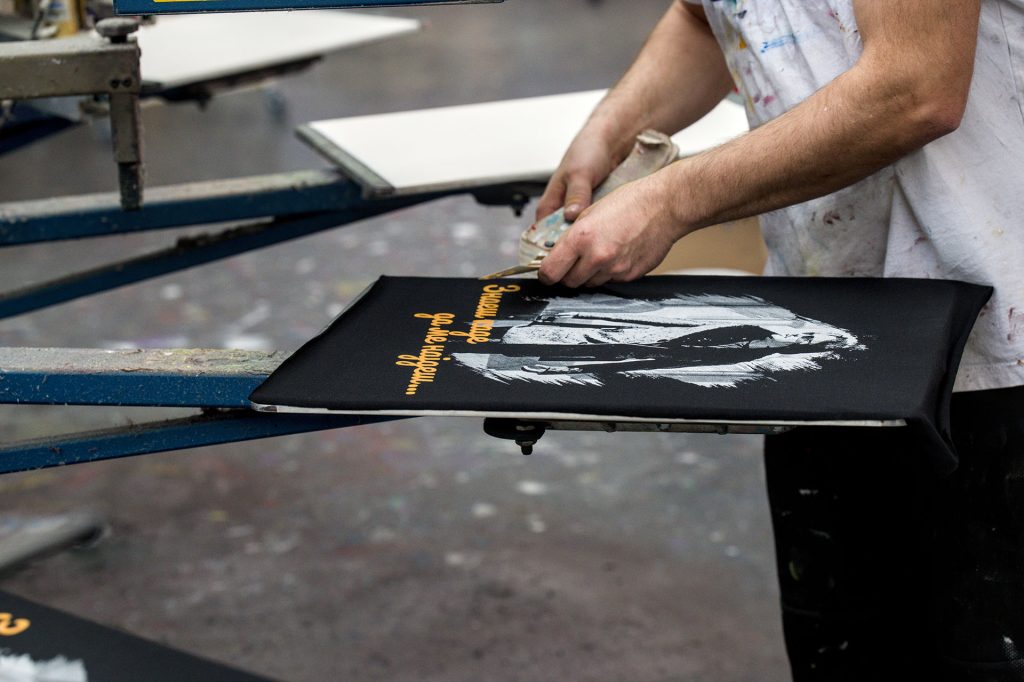
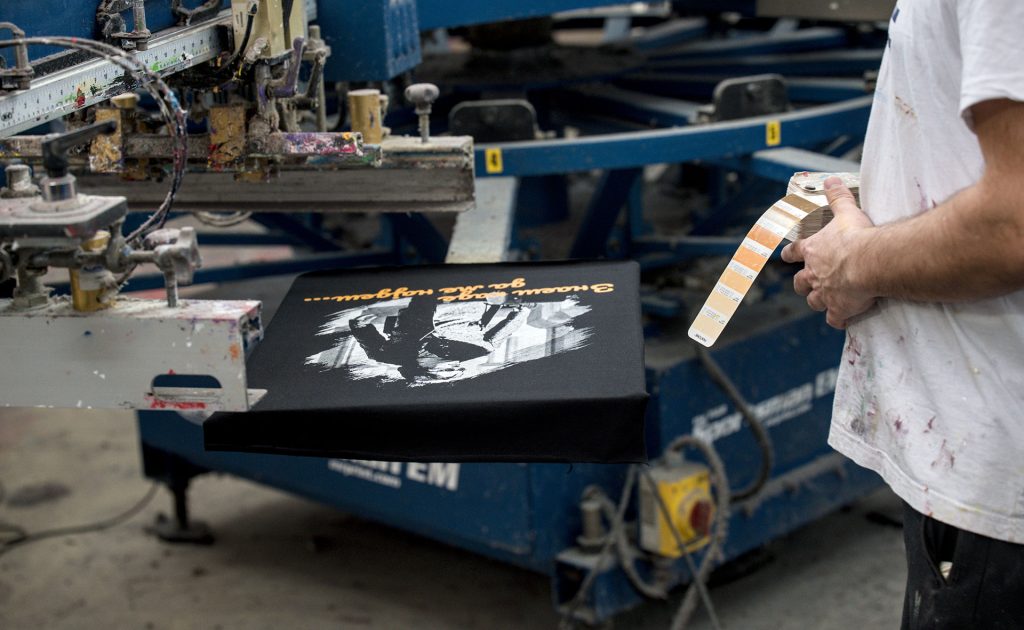
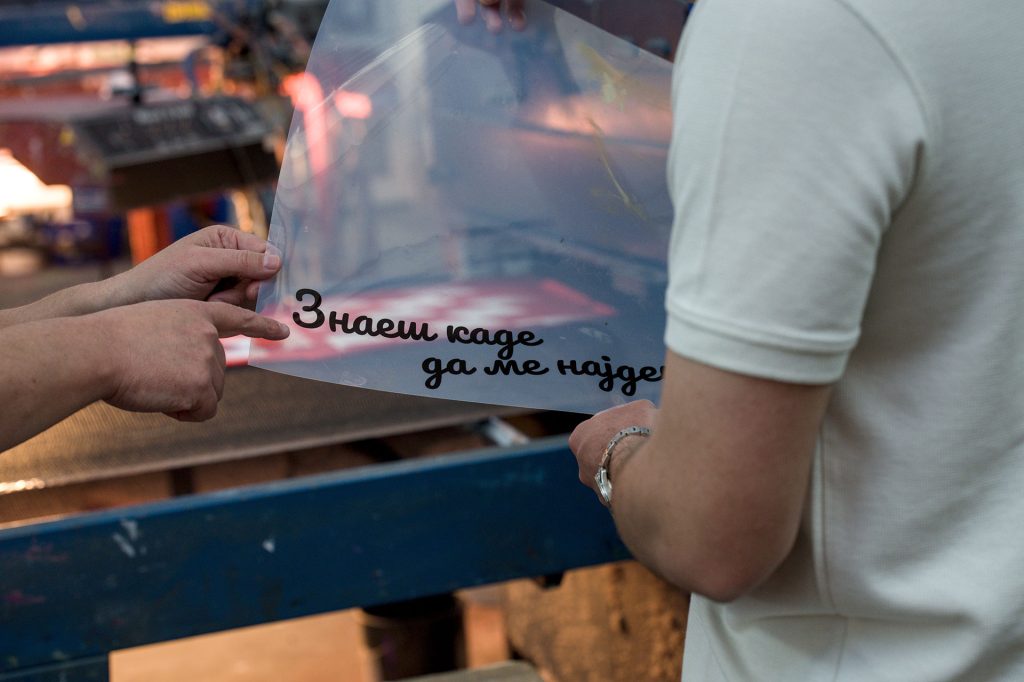
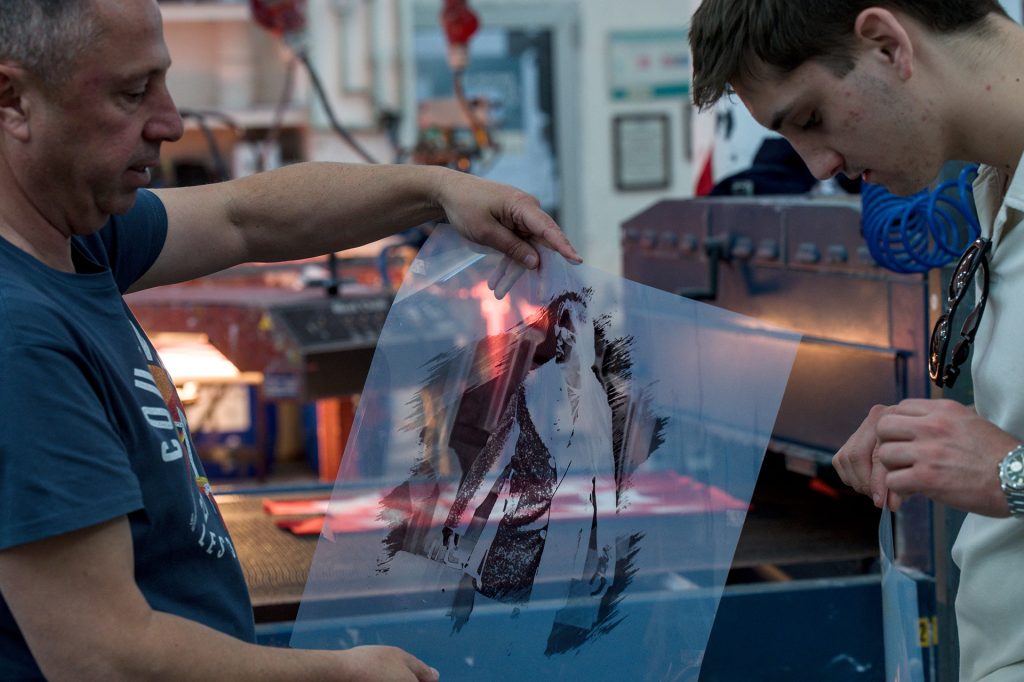
At one point, Aleksandar said they could make around 3,600 T-shirts per day. I smiled and told him we were making 100.
That contrast stayed with me.
A factory capable of thousands per day was helping us produce a small collectors’ run of 100.
For me, that reinforced the importance of choosing the right partner. We did not need a supplier that could only handle small, handmade batches. We needed professional production discipline applied to a limited cultural item.
The most exciting moment came when Urosh’s design, which had been on screen the day before, was printed onto fabric. The photograph spread across the front as imagined. The text sat correctly. The print had the precision we needed. That was the first real “wow” moment.
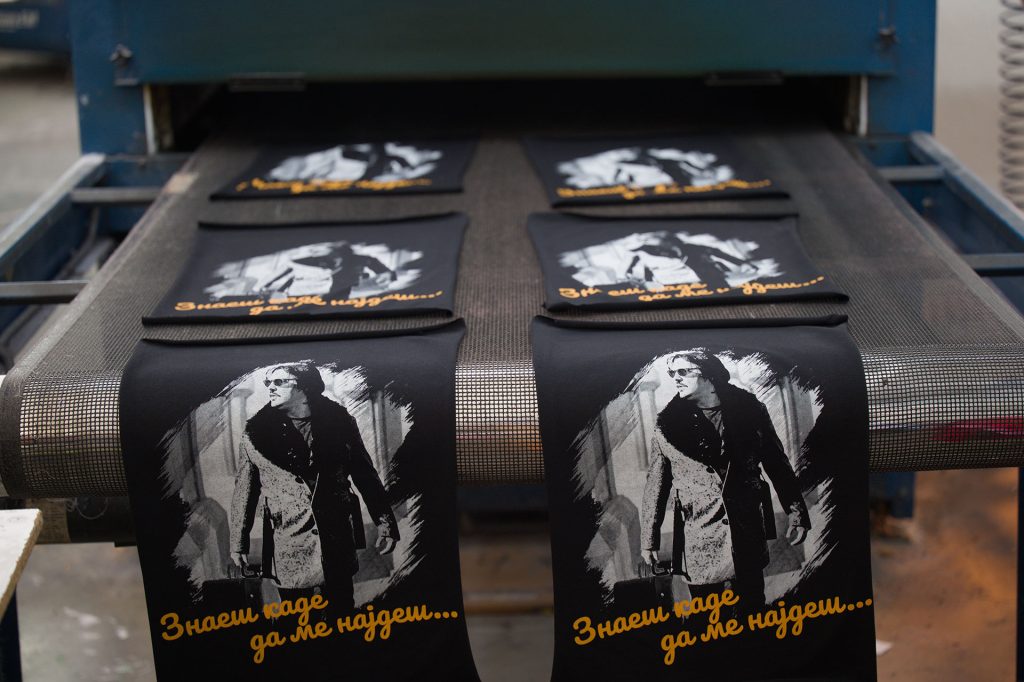
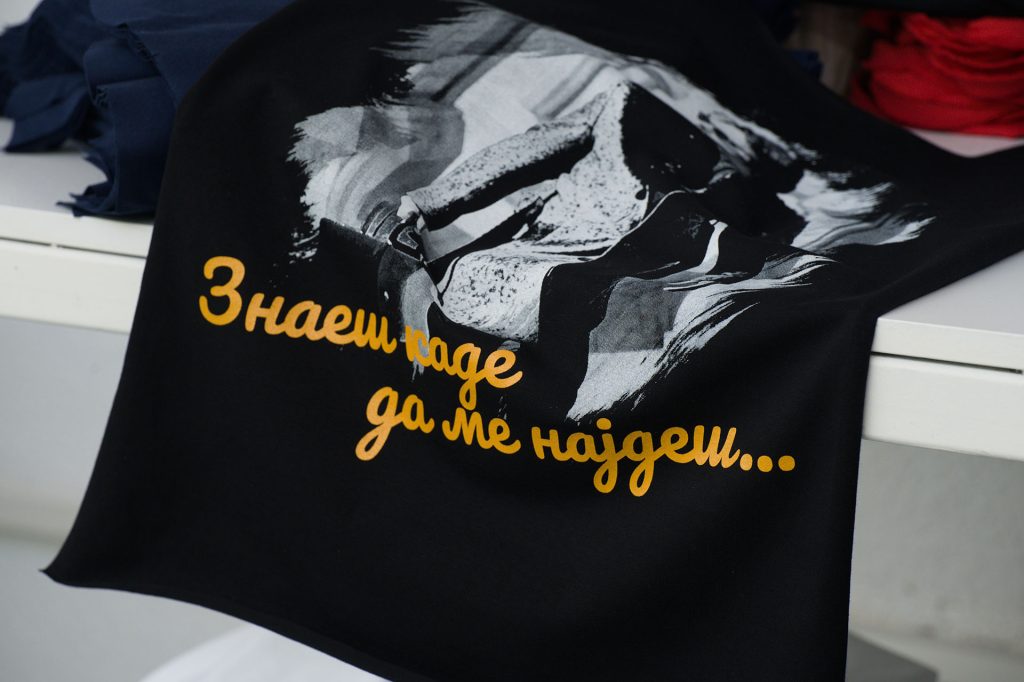
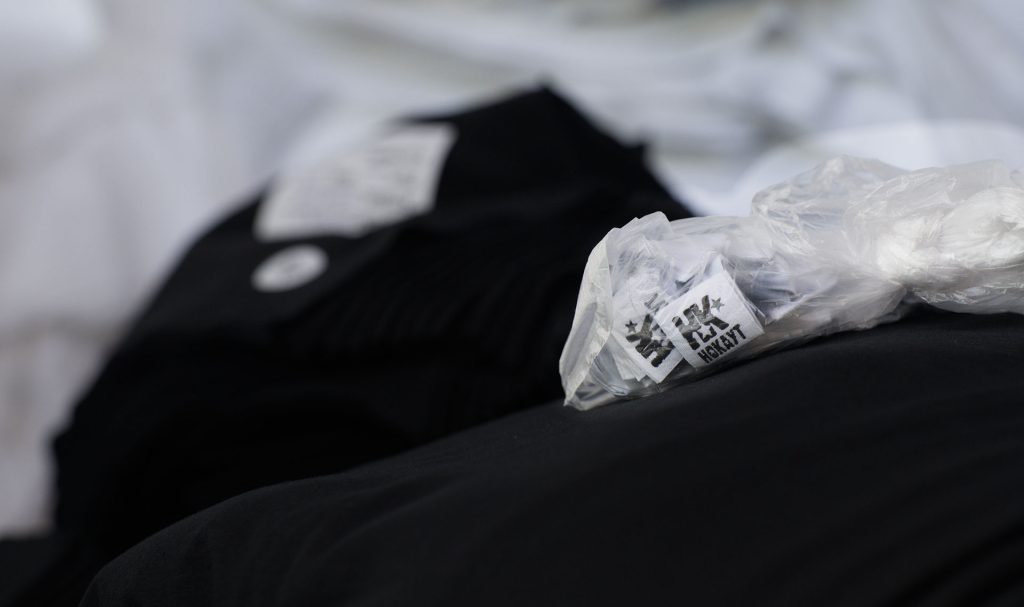
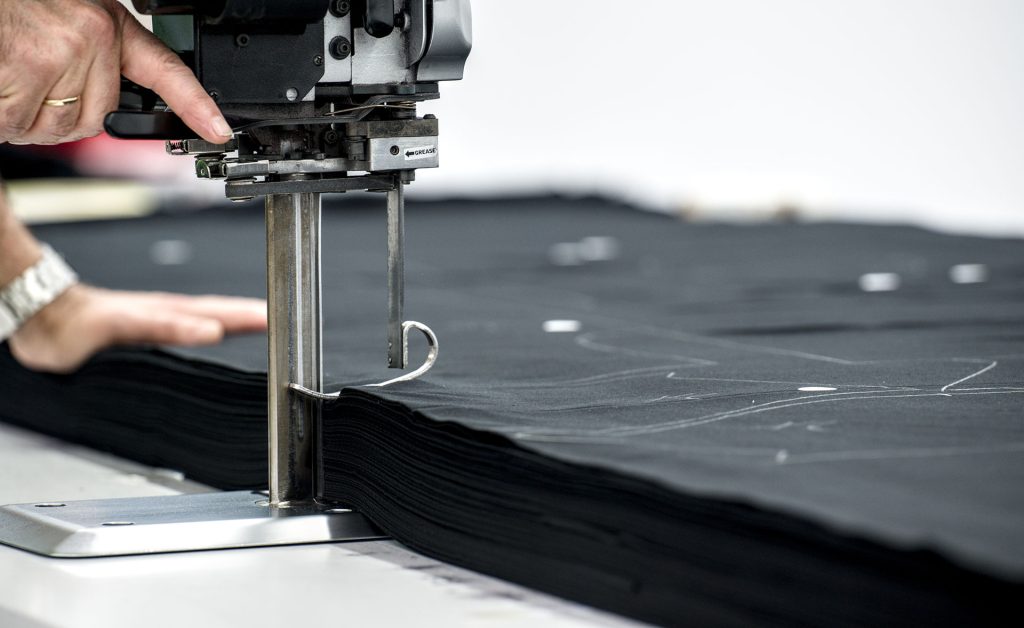
There were test samples before continuing, which is exactly how it should be. Measure three times, cut once. Or in production terms: validate before scaling the run.
Then came sewing, assembly, and finishing. We saw the sleeve where the woven label would go. We saw the item slowly stop being parts and start becoming a product.
At the end of the visit, Maksim held the first sample. It existed. What had started as a coffee conversation was now physical.
That moment is hard to explain to someone who has not shipped products.
It is relief, excitement, fear, and pride at the same time.
Because when the product becomes real, the responsibility becomes real too.
13. The Limited Edition Promise: 100 and Not One More
One of the strongest decisions in the project was the strict limit.
Only 100 pieces. No additional identical pieces later.
The fourth behind-the-scenes article states this clearly: the examples are collectors’ items, and regardless of sales performance or demand, no additional identical examples will be created.
This is easy to say before launch.
It becomes harder if demand increases.
But if you break the promise, you destroy the collectors’ logic.
Scarcity is not a marketing trick when it is honest. It is a product rule.
For this T-shirt, the rule was essential. The selected photograph had not been used on merchandise before, and the product’s uniqueness depended on the idea that this specific design, this specific visual treatment, and this specific run would not be repeated.
That creates trust. Collectors’ products are built on trust.
If someone buys number 17 of 100, they should never later discover that the “limited edition” quietly became 500 because sales were going well.
That would be short-term revenue and long-term brand damage.
As a product manager, I would rather leave money on the table than weaken the promise that gives the product its meaning.
14. What I Would Tell Project Managers
If I had to summarize the project management lessons from this initiative, I would start with one sentence:
Small projects are not automatically simple projects.
A 100-piece T-shirt series can still include stakeholders, approvals, suppliers, design risk, production risk, deadlines, marketing, distribution, packaging, customer communication, and budget discipline.
The difference is that small projects give you less room to hide.
In a large organization, inefficiency can sometimes be absorbed by budget, time, or headcount. In a small project, every weak decision becomes visible quickly.
Here are the lessons I would highlight for project managers.
1. Clarify the real deliverable
The deliverable was not “make T-shirts.”
The deliverable was “ship a 100-piece official collectors’ product that respects Nokaut’s identity and can be sold to fans with confidence.”
Those are not the same thing.
When you define the deliverable correctly, the decisions improve.
2. Control scope early
The creative conversation naturally expanded into multiple possible shirts, lyrics, stories, and future ideas. That was good energy, but dangerous for the first product.
The project needed one strong first release.
Scope control is not pessimism. It is how you protect delivery.
3. Identify risks before tasks
Tasks are easy to list. Risks require thinking.
For this project, the biggest risks were not “send email” or “upload image.” The real risks were brand misuse, poor production quality, unclear ownership, missed timing, design-print mismatch, and weak launch communication.
Once those were clear, the task list became meaningful.
4. Use tools for visibility, not theater
Linear helped me organize the work, but the tool itself did not manage the project.
A project management tool is useful only when it reflects reality.
If tasks are vague, owners are unclear, and decisions are made elsewhere, the tool becomes a decoration.
I used Linear to make the work visible and shareable, especially once Maksim joined as operational assistant. But also, as a side benefit, I aimed to further boost my experience by using the tool and testing the round-trip between me (a human) and an LLM in the Cursor coding editor on a real project. I was eager to continue investigating and experimenting with the new software development paradigm, in which I will be the central orchestrator, while all other required project roles will be handled by AI Agents.
5. Validate production feasibility before emotional commitment
It is easy to fall in love with a design, the art cause, and the will to help because of the emotions you developed for a song.
It is harder to ask whether the design can be produced correctly, whether it is good, and whether it is acceptable to others, except to you.
Before finalizing, I checked with EAM that the design could be printed without losing quality. That small feasibility check prevented a much larger problem later.
6. Treat communication as part of delivery
The behind-the-scenes articles were not “extra content.”
The intention was for them to create context, trust, and emotional connection.
In many projects, communication is treated as reporting. In reality, communication is part of the product experience, and for me, it is the essence. Having a bit of difficulty communicating (I missed the way they communicate) with the producer of the woven label, I lost precious time (counted in days).
15. What I Would Tell Product Managers
From a product management perspective, this project was a compact but complete product lifecycle.
There was a vision, target audience, value proposition, constraints, prototype/design phase, feasibility validation, supplier execution, launch channel, and early sales feedback.
Here are the product lessons.
1. Know what value the customer is buying
The customer was not buying only a T-shirt.
She was buying a limited connection to Nokaut, Pere, the 30-year anniversary, and a story that would not be repeated.
That emotional value shaped the product.
2. Do not confuse features with meaning
The woven label, hidden neck print, numbered magnet paper, and packaging were all features.
But the meaning was: this is official, rare, carefully made, and connected to a specific cultural moment.
Features support meaning. They are not the meaning by themselves.
3. Make trade-offs visible
Unique numbering printed directly on each T-shirt sounded attractive. But it added production complexity and cost.
The numbered magnet paper preserved the collectors’ value while keeping production sane.
I believe that is a good trade-off in the context of articulating and building a collective/premium product that incorporates emotional value.
4. Build only the sales infrastructure you need
I did not build a complex e-commerce platform.
I built a focused landing page that explained the product and supported ordering through a third-party service (Buy Me A Coffee), which doesn’t require prepayment or a subscription. They charge a fee per transaction if an item is sold.
For an early, limited run and to verify the idea and some of the hypotheses for collectors’ products, that was enough.
5. Launch with a story, not only inventory
The launch worked through narrative.
The audience could follow the process from idea to planning to design to production.
That makes the product feel earned.
16. What Entrepreneurs Can Learn From This
Entrepreneurs often ask for help when the idea is already messy.
They have a concept, a few conversations, maybe a designer, maybe a supplier, maybe a developer, maybe a deadline, and maybe ten different versions of what the product could become.
What they need is not always more energy. Often, they need structure. This project shows how I like to work.
I start by briefly articulating the idea. Then I look for the real product promise. After that, I identify the risks, define the first shippable scope, gather the right people, set up a simple working system, coordinate execution, and keep the marketing and launch layer connected to the product from the beginning.
That is true whether the result is software, a digital platform, an internal business tool, or a physical collectors’ product.
The skills are transferable:
- Listening
- Business analysis
- Product definition
- Scope control
- Project planning
- Stakeholder management
- Supplier coordination
- Team formation
- Technical execution
- Content strategy
- Launch discipline
- Continuous learning
I do not see project management as administration. I see it as an organized responsibility.
Someone has to hold the full picture. Someone has to notice when the design depends on production, when production depends on labels, when labels depend on logo files, when the landing page depends on copy, when copy depends on language review, when sales depend on trust, and when trust depends on keeping promises.
In this project, I was that someone.
17. Timeline of the Project
Here is the simplified timeline.
April 5, 2026
Music Nonstop Today and Pere from Nokaut publicly announced their official business collaboration for Nokaut-branded products.
April 24, 2026
The first behind-the-scenes article was published, telling the story of the initial coffee conversation and the idea of creating an artifact, not ordinary merch.
May 2, 2026
The second article was published, covering planning, production research, team formation, Linear setup, and the landing page work.
May 3, 2026
The third article was published, focusing on the design process with Urosh Veljkovic, the woven label, the design specification, feedback, and the production feasibility check.
May 4, 2026
The fourth article was published, documenting the production visit to EAM in Shtip. All 100 pieces were produced and delivered to Music Nonstop Today on the same day, and sales started with the landing page link included in the article.
May 11, 2026
Five of the 100 T-shirts had been sold, leaving 95 available.
This timeline was short, but it was not accidental.
The work moved because the scope was controlled, the team was small, and the next step was always clear enough to execute.
18. Frequently Asked Questions
Was this an official Nokaut product?
Yes. The product was created as part of the official business collaboration between Music Nonstop Today and Pere from Nokaut for Nokaut’s branded products. The collaboration covered design, production, sales, distribution, and promotion.
Why only 100 pieces?
Because the product was designed as a collectors’ item, not as a mass merchandise product. The limitation is part of the product’s value and promise.
Will more identical T-shirts be produced if the 100 pieces sell out?
No. The commitment is that no additional identical pieces will be produced, regardless of demand.
Why was the unique number not printed on each T-shirt?
Printing a unique number on every T-shirt would have added production complexity and cost. The better product decision was to include the unique number as magnet paper inside the package box.
Who designed the T-shirt?
The graphic design was created by Urosh Veljkovic, based on the project direction and specification prepared during the planning and design phase.
Where were the labels produced?
The woven sleeve labels with the Nokaut logo were produced by Cice Trade in Tetovo.
Where were the T-shirts produced?
The T-shirts were produced by EAM in Shtip, North Macedonia. The production process was documented in the fourth behind-the-scenes article.
What tools were used to manage and launch the project?
I used Linear for project organization, Cursor connected with Claude for early AI-assisted coding direction, Google AI Studio for the landing page development, GitHub for code storage, and Google Cloud for hosting.
What was the biggest project management lesson?
The biggest lesson was that even a small physical product needs serious project thinking. If you want the result to feel simple to the customer, the work behind it must be organized.
19. Closing Reflection
When I look back at the Nokaut collectors’ T-shirt project, I do not see only a music-merch initiative. I see a compact product-development case study.
It started with trust and a conversation. It moved through planning, scope control, team building, supplier selection, design, AI-assisted development, manufacturing, content, and launch. It ended with 100 physical products delivered and ready for the people who understand what Nokaut means.
For me, that is the satisfying part. The idea did not stay in a notebook. It did not become an endless discussion. It did not expand into an unrealistic fantasy. It shipped.
That is what I love about good project work. At its best, project management is not about meetings, charts, and tools. Those things help, but they are not the point.
The point is turning intention into reality.
A conversation becomes a roadmap.
A roadmap becomes tasks.
Tasks become decisions.
Decisions become a team.
A team creates a product.
A product reaches people.
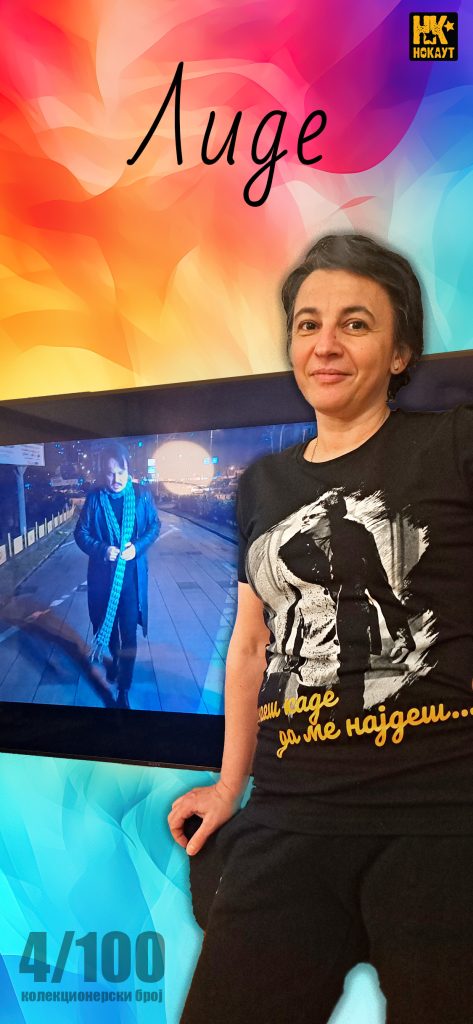
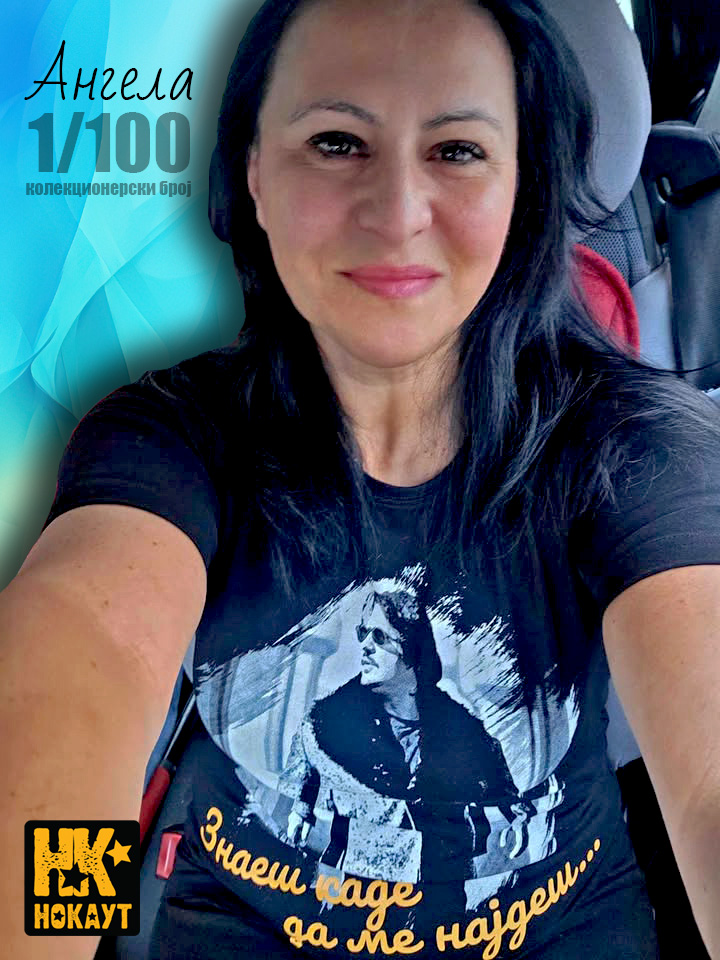
And sometimes, if the project is handled with enough care, that product becomes more than the object itself. Sometimes it becomes an artifact.
☕If this article was helpful, you can support my work and help me continue writing practical case studies from the intersection of project management, product management, software development, and creative industries.
If you have an idea for a product or service and need someone who can articulate it in a structured format, define a project, create a suitable team, and govern the entire workflow to make your idea a reality, better call VBU.